

























Key Insights
Missed calls translate directly to lost revenue, with 80-85% of callers never leaving voicemail. For beauty businesses where clients easily find alternatives, each unanswered inquiry could represent thousands in lifetime value. A salon missing just five calls daily loses approximately 150 monthly booking opportunities—potentially $43,200 annually at conservative conversion rates and average service values of $80.
AI-powered reception technology delivers 24/7 coverage at 80-90% lower costs than traditional staffing. While full-time receptionists require $30,000-$45,000 annually plus benefits and management, modern voice AI systems start under $100 monthly with no setup fees or contracts. These platforms maintain perfect consistency without breaks, sick days, or performance variability, answering instantly regardless of call volume or time.
Seamless calendar integration eliminates administrative burden and prevents double-bookings. Quality solutions connect directly with salon management platforms like Boulevard, Vagaro, and Mindbody, accessing real-time availability and syncing appointments automatically. This real-time synchronization ensures accurate scheduling without manual data entry, while understanding industry-specific requirements like stylist specialties, service durations, and buffer times between appointments.
Professional phone coverage enhances both caller experience and in-person service quality simultaneously. When staff aren't interrupted by ringing phones during color applications or massage sessions, they deliver more focused, higher-quality treatments. Meanwhile, callers receive immediate, knowledgeable attention rather than voicemail frustration. This dual improvement increases client satisfaction, retention rates, and positive reviews while reducing staff stress and workplace interruptions.
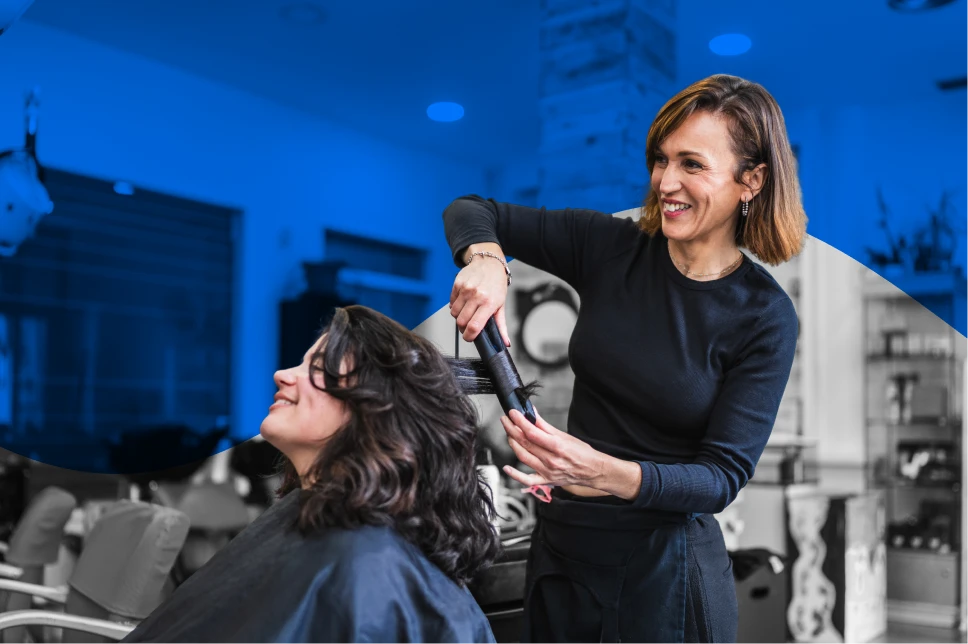
Running a successful salon or spa means juggling appointments, walk-ins, product sales, and staff coordination—all while delivering exceptional service to clients in your chair. When the phone rings during a color application or massage session, you face an impossible choice: interrupt the client experience or risk losing a potential booking to voicemail. A salon answering service solves this challenge by ensuring every call receives immediate, professional attention while your team stays focused on the clients in front of them.
What Is a Salon Answering Service?
Definition and Core Functions
A salon answering service provides dedicated phone support for beauty and wellness businesses, handling incoming calls when your staff is unavailable or occupied with clients. These services answer calls on your behalf, following customized scripts that reflect your brand voice and business policies. Professional receptionists—whether human agents or AI-powered systems—can schedule appointments, answer service questions, take messages, and provide pricing information without interrupting your stylists or estheticians.
The core purpose extends beyond simply picking up the phone. Quality solutions integrate with your existing booking software, maintain detailed call records, and route urgent matters according to your preferences. This creates a seamless experience where callers receive immediate assistance while your business captures every opportunity without adding administrative burden to your team.
How Salon Answering Services Work
When you implement this solution, calls to your salon number are forwarded to the service during specified hours or when your lines are busy. The service answers using your business name and follows protocols you've established. For appointment requests, receptionists access your calendar system in real-time to book available slots. For inquiries about services, they reference your menu and pricing. Messages are delivered instantly via text, email, or through a dedicated portal.
Modern systems offer flexible coverage options. You might activate the service only during peak hours when your front desk is overwhelmed, or use it exclusively for after-hours and weekend calls. Some salons forward all calls immediately, allowing staff to eliminate phone interruptions entirely. The technology integrates with popular salon management platforms, ensuring appointment data syncs automatically without manual entry.
Live Receptionist vs. AI-Powered vs. Hybrid Solutions
Traditional live answering services employ human receptionists who handle your calls from a call center. These agents bring conversational flexibility and can navigate complex situations, but they typically cost more and may have longer setup times as staff learn your specific services and policies.
AI-powered virtual receptionists use advanced voice technology to conduct natural conversations with callers. At Vida, our AI Receptionist answers instantly, speaks naturally, and handles appointment scheduling, service inquiries, and message-taking 24/7 without the variability of human agents. The technology learns your business specifics during setup and consistently represents your brand according to your exact specifications. Because AI systems don't require breaks, shift changes, or time off, they deliver truly uninterrupted coverage at a fraction of traditional costs.
Hybrid approaches combine both technologies, using AI for routine inquiries and routing complex situations to human backup. This model attempts to balance cost and flexibility but can create inconsistent experiences as callers move between systems.
Industry-Specific Features for Beauty Businesses
Effective solutions understand the unique vocabulary and workflows of salons and spas. They recognize service names like balayage, microdermabrasion, or keratin treatments. The system knows to ask about stylist preferences, collect information about hair type or skin concerns, and understand the difference between consultation requests and regular appointments.
Industry-specific features include:
- Service menu knowledge: Accurate descriptions of treatments, durations, and pricing
- Stylist-specific scheduling: Booking with preferred providers based on availability and specialties
- Product inventory awareness: Information about retail products and availability
- Consultation protocols: Proper handling of first-time clients requiring consultations
- Cancellation policies: Clear communication of your booking terms and deposit requirements
- Membership programs: Understanding of package deals, membership benefits, and loyalty programs
Why Salons and Spas Need Professional Call Answering
The Cost of Missed Calls in the Beauty Industry
Research shows that 80-85% of callers who reach voicemail won't leave a message, and among those who do, most won't wait for a callback before booking elsewhere. For beauty businesses where clients can easily find alternative providers, every missed call represents direct revenue loss. A single unanswered call from a potential client seeking regular services could mean losing thousands in lifetime value.
The impact extends beyond immediate bookings. Missed calls from existing clients trying to reschedule create gaps in your schedule that remain unfilled. When clients can't reach you easily, they perceive your business as less professional or too busy for their needs, damaging your reputation and client retention.
Client Expectations: Immediate Response Culture
Today's consumers expect instant gratification across all service interactions. Studies indicate that 78% of customers buy from the company that responds to their inquiry first. In the beauty industry, where the experience begins with the first point of contact, meeting this expectation is essential for building the trust and rapport that leads to long-term client relationships.
Modern clients often compare multiple salons before booking. The business that answers first typically wins the appointment. When your competitor provides immediate response while your calls go to voicemail, you're voluntarily surrendering market share regardless of your superior skills or services.
Staff Productivity and Client-Facing Time
Every phone interruption pulls your team away from the client in their chair. A stylist answering calls mid-service provides a fragmented experience that diminishes both the caller's and the in-person client's satisfaction. Front desk staff juggling phones, check-ins, product sales, and administrative tasks can't excel at any single responsibility.
When staff members aren't constantly interrupted by ringing phones, they deliver better service quality. Stylists maintain focus and creative flow. Estheticians provide more relaxing treatments. Front desk personnel offer warmer greetings and more attentive check-out experiences. This improved service quality translates directly to higher client satisfaction, better reviews, and increased retention.
After-Hours and Weekend Booking Opportunities
Many potential clients browse for salon services during evenings and weekends when they're planning their schedules. If your salon closes at 6 PM but someone searches for services at 8 PM, you've lost that opportunity unless you have after-hours coverage. Similarly, Sunday evening often sees a spike in booking activity for the week ahead.
Professional answering services capture these off-hours opportunities without requiring you to work around the clock or pay staff overtime. At Vida, our AI Receptionist provides genuine 24/7 availability, ensuring that whenever someone decides they need your services, they can immediately connect and book—even at 2 AM on a holiday.
Key Benefits of Salon Answering Services
Never Miss a Booking Opportunity
With professional call coverage, every inquiry receives immediate attention regardless of how busy your salon is. Whether you're fully booked with services, short-staffed, or closed for the day, callers reach a knowledgeable representative who can schedule appointments, answer questions, and capture lead information. This comprehensive coverage eliminates the revenue leakage that occurs when calls go unanswered.
The financial impact is substantial. If your average service generates $100 and you currently miss just three calls per day due to busy lines or after-hours timing, that's potentially $9,000 in monthly revenue walking away. Quality answering solutions typically pay for themselves many times over through captured bookings alone.
Enhanced Client Experience and Satisfaction
Clients notice when they receive prompt, professional attention from their first interaction with your business. A friendly voice answering immediately, knowledgeably discussing your services, and efficiently handling their request creates a positive impression that sets the tone for their entire relationship with your salon.
This enhanced experience extends to your in-person clients as well. When your team isn't distracted by constantly ringing phones, they provide more attentive, personalized service. Clients feel valued when they have your undivided attention, leading to stronger loyalty and more frequent visits.
Cost Savings vs. Full-Time Receptionist
Hiring a full-time receptionist costs $30,000-$45,000 annually when you factor in salary, benefits, taxes, and training. That employee works limited hours, requires time off, and may call in sick. Professional answering services provide comparable or superior coverage at a fraction of this cost—often $200-$500 monthly depending on call volume.
At Vida, our AI Receptionist starts at just $95 per month for 50 calls, with transparent per-call pricing beyond that threshold. There are no setup fees, no cancellation penalties, and no hidden costs. You gain 24/7 coverage, perfect consistency, instant deployment, and seamless integration with your existing systems—all while saving thousands compared to traditional staffing.
Improved Staff Focus and Reduced Interruptions
When your team isn't constantly interrupted by phone calls, they work more efficiently and deliver higher quality services. Stylists can maintain creative focus during complex color applications. Massage therapists provide more relaxing experiences without phone disruptions. Front desk staff can focus on greeting clients warmly, processing transactions smoothly, and maintaining a welcoming atmosphere.
This improved focus reduces mistakes, increases service quality, and creates a calmer, more professional environment. Staff satisfaction improves when they're not torn between multiple competing demands, leading to better retention and a more positive workplace culture.
Scalability for Growing Businesses
As your salon grows—whether you're adding stylists, expanding services, or opening additional locations—your call volume increases proportionally. Traditional staffing requires hiring additional receptionists, training them, and managing complex scheduling to ensure coverage. Professional answering services scale effortlessly to handle increased volume without requiring you to make hiring decisions or increase fixed costs significantly.
This scalability proves particularly valuable during seasonal peaks, promotional campaigns, or unexpected growth spurts. You can handle double your normal call volume without scrambling to find temporary staff or overwhelming your existing team.
Professional Brand Image
Consistently answering calls promptly with knowledgeable, friendly service positions your salon as professional and well-organized. This perception matters enormously in the beauty industry, where clients are entrusting you with their appearance and self-confidence. A polished phone presence signals that you operate with the same attention to detail and professionalism in all aspects of your business.
Conversely, frequently busy signals, long hold times, or voicemail greetings suggest disorganization and create doubt about whether you can deliver the quality experience clients expect. Professional answering services ensure every caller experiences the high standards your brand promises.
Essential Features to Look For
Appointment Scheduling and Calendar Integration
The most critical feature is seamless integration with your existing booking system. The service should access your calendar in real-time, view available appointments, book clients into open slots, and sync this information automatically without requiring manual data entry. Look for solutions that integrate with popular salon management platforms used in the beauty industry.
Effective appointment scheduling capabilities include understanding appointment durations, respecting buffer times, recognizing stylist specialties, and managing double-booking prevention. The system should also handle rescheduling and cancellations according to your policies, updating your calendar immediately to keep availability accurate.
Service Menu Knowledge and Pricing Information
Your answering service should function as a knowledgeable extension of your team, accurately describing your services and providing current pricing. This requires the system to maintain detailed information about each treatment, understand which services can be combined, and explain the differences between similar offerings.
At Vida, we help you configure your AI Receptionist with comprehensive service details during setup. The system learns your menu, pricing structure, and service descriptions, then communicates this information naturally during conversations. When you update pricing or add new services, you can instantly update the system to ensure accuracy.
Bilingual Support Capabilities
In diverse markets, offering service in multiple languages significantly expands your potential client base. Bilingual capabilities ensure that Spanish-speaking, Mandarin-speaking, or other language communities can comfortably inquire about services and book appointments in their preferred language.
Quality bilingual support goes beyond basic translation—it requires cultural competency and natural fluency. The service should seamlessly switch languages based on caller preference and maintain the same professional, knowledgeable tone across all supported languages.
Message Taking and Notification Systems
For inquiries that require follow-up or situations the answering service can't resolve immediately, robust message-taking capabilities are essential. The system should collect detailed information including caller name, contact information, preferred callback times, and specific questions or concerns.
Notification delivery should be immediate and flexible. Look for services offering text message alerts, email notifications, and portal access to messages. You should be able to configure different notification methods for different message types—urgent matters might trigger immediate texts, while general inquiries could be batched in email summaries.
Call Recording and Transcription
Call recordings provide valuable quality assurance and training opportunities. You can review how inquiries are handled, identify areas for script improvement, and resolve any disputes about what was communicated. Transcriptions make it easy to scan call content quickly without listening to entire recordings.
These features also support business intelligence. Analyzing call patterns reveals which services generate the most inquiries, what questions callers frequently ask, and how effectively the service converts inquiries to bookings. This data informs marketing decisions and service offerings.
CRM and Booking Software Integration
Beyond calendar integration, comprehensive CRM connectivity ensures that caller information, appointment history, service preferences, and notes sync across your entire business ecosystem. When a client calls, the system should recognize them, access their history, and provide personalized service based on past visits.
At Vida, our platform integrates with leading CRM systems and salon management software through direct connections and integration tools. This ensures appointment data, client records, and communication history remain synchronized across all your business tools without manual data entry.
Customizable Call Scripts and Protocols
Your answering service should represent your brand voice and follow your specific business protocols. This requires customizable scripts that reflect your communication style, policies, and procedures. You should be able to specify exactly how calls are greeted, what information is collected, how services are described, and when calls are escalated or transferred.
Look for solutions that make script customization straightforward and allow updates without lengthy delays. Your business evolves—new services launch, policies change, seasonal promotions run—and your answering service should adapt quickly to reflect these changes.
SMS and Multi-Channel Support
Modern clients increasingly prefer text communication for quick questions and confirmations. Services offering SMS capabilities can respond to text inquiries, send appointment confirmations and reminders, and handle two-way text conversations according to your preferences.
Multi-channel support extends to web chat, social media messages, and other digital communication channels. Comprehensive solutions manage all these touchpoints from a unified platform, ensuring consistent service quality regardless of how clients choose to connect.
How Much Does a Salon Answering Service Cost?
Pricing Models Explained
Answering services typically use one of several pricing structures:
Per-call pricing charges a fixed rate for each call answered, regardless of duration. This model offers predictability and works well for businesses with consistent call patterns. Rates typically range from $0.99 to $3.00 per call depending on the service level and features included.
Per-minute pricing charges based on talk time, usually in 30-second or one-minute increments. Base rates might start at $1.00-$2.00 per minute, with monthly minimums. This model can become expensive if your calls tend to run long.
Monthly plans include a set number of calls or minutes, with overage charges for additional usage. Plans might offer 50 calls for $200/month, 100 calls for $350/month, etc. This provides budget predictability but requires estimating your usage accurately.
Flat-rate unlimited plans charge a fixed monthly fee regardless of call volume. These are rare in the industry and typically come with restrictions or lower service quality to manage provider costs.
Average Cost Ranges by Service Type
Traditional live answering services with human receptionists typically cost $200-$500 monthly for small salons handling 50-150 calls. Mid-sized operations with 200-400 monthly calls might pay $500-$1,000. These services often require setup fees of $50-$200 and may have contract commitments.
AI-powered solutions like Vida's AI Receptionist offer significantly lower costs. Our service starts at $95 per month for 50 calls, with additional calls at $0.99 each. There are no setup fees, no cancellation penalties, and no long-term contracts. For a salon receiving 100 calls monthly, this translates to approximately $145—a fraction of traditional service costs while providing superior 24/7 availability and instant response times.
Hybrid services combining AI and human backup typically fall between these ranges, often starting around $150-$300 monthly for basic coverage.
Hidden Fees to Watch For
Beyond advertised rates, many providers include additional charges that inflate actual costs:
- Setup and onboarding fees: $50-$300 for initial configuration and training
- Integration charges: Monthly fees for connecting to your booking software or CRM
- Holiday and weekend premiums: Higher rates for after-hours coverage
- Minimum monthly charges: Required spending regardless of actual usage
- Overage penalties: Steep per-call charges when you exceed plan limits
- Contract termination fees: Penalties for canceling before commitment periods end
- Call transfer charges: Fees for routing calls to your staff
- Customization costs: Charges for updating scripts or changing protocols
At Vida, we maintain transparent pricing with no hidden fees. What you see is what you pay—no setup charges, no integration fees, no holiday premiums, and no cancellation penalties.
ROI Calculation: Cost vs. Revenue from Captured Bookings
To evaluate whether an answering service makes financial sense, calculate the revenue from captured bookings against the service cost. Consider these factors:
If your salon currently misses an average of 5 calls per day due to busy lines or after-hours timing, that's approximately 150 calls monthly. If 30% of those callers would have booked appointments (a conservative estimate), you're losing 45 bookings monthly. At an average service value of $80, that represents $3,600 in monthly revenue loss—$43,200 annually.
An answering service costing $300 monthly ($3,600 annually) that captures even 20% of those lost bookings generates an additional $8,640 in revenue—a return of 2.4x the investment. The actual return is typically higher because improved customer experience also increases retention and referrals.
For a more precise calculation specific to your business, track missed calls for two weeks, estimate your booking conversion rate, and multiply by your average service value. Compare this potential revenue to service costs to determine your expected ROI.
Budget Considerations for Different Salon Sizes
Solo stylists and small salons (1-3 chairs): Focus on affordable AI-powered solutions that provide core appointment scheduling and message-taking. Budget $100-$200 monthly. Prioritize after-hours coverage when you're unavailable rather than all-day service.
Mid-sized salons (4-10 chairs): Invest in comprehensive coverage including peak-hour overflow and after-hours service. Budget $300-$600 monthly. Prioritize calendar integration and CRM connectivity to manage higher appointment volumes efficiently.
Large salons and day spas (10+ chairs/rooms): Consider full-coverage solutions that handle high call volumes with advanced features like multi-location support and detailed analytics. Budget $600-$1,200 monthly depending on volume. The investment is justified by the substantial revenue these larger operations stand to lose from missed calls.
Multi-location operations: Seek enterprise solutions that can manage different locations, service menus, and staff schedules from a unified platform. Budget varies widely based on total call volume but expect $1,000-$3,000 monthly for comprehensive multi-location support.
How to Choose the Right Answering Service for Your Salon
Assessing Your Salon's Specific Needs
Begin by analyzing your current call patterns and pain points. Track how many calls you receive daily, when peak call times occur, and how many calls go unanswered. Document what percentage of calls are appointment bookings versus inquiries, rescheduling requests, or other matters. This data reveals whether you need comprehensive all-day coverage or targeted support during specific hours.
Consider your staff situation. Do you have front desk coverage but need overflow support during busy periods? Are you a solo practitioner who needs comprehensive coverage while you're with clients? Do you need after-hours service to capture evening and weekend bookings? Your staffing reality determines the type of coverage that provides the most value.
Evaluate your technical ecosystem. What booking software do you currently use? What CRM or client management system? The answering service you choose must integrate seamlessly with these existing tools to avoid creating additional administrative work.
Questions to Ask Potential Providers
When evaluating options, ask these critical questions:
- What is your total cost including all fees, not just the advertised base rate?
- How quickly can you deploy service for my salon?
- What booking systems do you integrate with natively?
- How do you handle calls that require specialized knowledge or judgment?
- What happens if your system experiences downtime?
- How quickly can I update scripts or change protocols?
- Do you offer bilingual support in my market's languages?
- What reporting and analytics do you provide?
- What are your contract terms and cancellation policies?
- Can I listen to sample calls or test the service before committing?
Evaluating Industry Experience and Training
Providers with beauty industry experience understand salon-specific terminology, services, and client expectations. They know that "balayage" isn't a foreign language, that consultation appointments differ from regular bookings, and that clients often have strong stylist preferences.
Ask about industry-specific training programs. How do they ensure receptionists or AI systems understand beauty services? Can they accurately describe the difference between highlights and lowlights? Do they know to ask about hair length and texture when providing service recommendations?
At Vida, our AI Receptionist is configured specifically for your salon during setup. We work with you to teach the system your complete service menu, pricing, policies, and industry-specific protocols. The technology learns your business comprehensively before handling its first call, ensuring accurate, knowledgeable responses from day one.
Testing Call Quality and Response Times
Before committing, test the service yourself. Make test calls at different times of day to evaluate response speed, professionalism, and accuracy. Pose challenging questions about services, pricing, and availability. Request appointment bookings and assess how smoothly the process flows.
Pay attention to how natural the conversation feels. Do responses sound scripted and robotic, or natural and helpful? Does the representative ask appropriate follow-up questions? Do they handle unexpected inquiries gracefully? These test calls reveal the actual client experience better than any sales presentation.
Integration Compatibility Checklist
Verify that the service integrates with your existing technology stack:
- Booking/scheduling software (leading salon management platforms)
- CRM system for client records and history
- Payment processing for deposits or pre-payments
- Communication tools for text reminders and confirmations
- Marketing platforms for lead capture and follow-up
- Analytics tools for business intelligence
Confirm whether integrations are native (direct connections) or require third-party automation platforms. Native integrations are typically more reliable and require less maintenance, while third-party connections may introduce additional costs and complexity.
Contract Terms and Flexibility
Review contract terms carefully. Month-to-month agreements provide maximum flexibility, allowing you to discontinue service if it doesn't meet expectations. Long-term contracts (6-12 months) may offer lower rates but lock you in regardless of satisfaction.
Understand cancellation policies. Can you cancel anytime, or are there termination fees? What notice period is required? Can you adjust service levels easily as your needs change? Flexible terms indicate a provider confident in their service quality and committed to earning your business continuously rather than trapping you in unfavorable agreements.
Free Trials and Money-Back Guarantees
Providers offering free trials or money-back guarantees demonstrate confidence in their service quality. These risk-free evaluation periods allow you to test the service with real calls before committing financially.
At Vida, we offer a seven-day free trial of our AI Receptionist, allowing you to experience the technology with your actual call volume and evaluate whether it meets your needs. This hands-on testing reveals exactly how the service will perform for your specific situation.
Implementation Best Practices
Setting Up Your Service: Step-by-Step Guide
Successful implementation follows a structured process:
Step 1: Information gathering. Compile comprehensive details about your business—service menu with descriptions and pricing, staff schedules and specialties, booking policies and procedures, frequently asked questions, and brand voice guidelines.
Step 2: Script development. Work with your provider to create call scripts that reflect your brand personality and cover common scenarios. Include greetings, service descriptions, appointment booking flows, message-taking protocols, and call transfer procedures.
Step 3: System configuration. Set up integrations with your booking software, CRM, and communication tools. Configure notification preferences, define business hours and coverage schedules, and establish call routing rules.
Step 4: Testing. Conduct thorough testing before going live. Make test calls covering various scenarios—new client bookings, existing client rescheduling, service inquiries, and complex situations. Verify that appointments sync correctly and notifications deliver as expected.
Step 5: Soft launch. Begin with limited coverage (perhaps after-hours only) to validate performance before full deployment. Monitor calls closely and refine scripts based on real interactions.
Step 6: Full deployment. Expand to comprehensive coverage once you're confident in system performance. Communicate the change to your staff and update your marketing materials to highlight improved availability.
Creating Effective Call Scripts
Quality scripts balance structure with flexibility. They provide consistent information while allowing natural conversation flow. Effective scripts include:
Professional greeting: "Thank you for calling [Salon Name], this is [Name], how may I help you today?"
Service descriptions: Clear, benefit-focused explanations of treatments that help callers understand what they're booking. Avoid technical jargon that confuses rather than clarifies.
Qualifying questions: Information gathering that helps match clients with appropriate services and providers. "Have you visited us before?" "Do you have a preferred stylist?" "What are you hoping to achieve with this service?"
Booking confirmation: Clear summary of appointment details including date, time, service, provider, duration, and pricing. "I have you scheduled with Jennifer for a full highlight on Tuesday, March 15th at 2 PM. The service takes approximately 2.5 hours and costs $180. Does that work for you?"
Policy communication: Natural mention of cancellation policies, deposit requirements, or arrival instructions without sounding legalistic or unwelcoming.
Closing: Warm conclusion that reinforces the positive experience. "We're looking forward to seeing you on Tuesday! If you need anything before then, don't hesitate to call."
Training the Service on Your Business
Comprehensive training ensures accurate, knowledgeable service from the start. Provide detailed information about:
- Each service you offer—what it includes, how long it takes, who it's best for, and what it costs
- Your stylists and service providers—their specialties, experience levels, and booking preferences
- Your products—retail lines you carry and which products you recommend for common concerns
- Your policies—cancellation terms, deposit requirements, late arrival procedures, and consultation processes
- Your location—parking information, accessibility details, and directions for first-time visitors
- Common questions—answers to inquiries you receive frequently
With AI-powered solutions like Vida's, this training happens during initial configuration. You provide comprehensive business information, and the system learns your specifics before handling calls. Updates are simple—you can modify service descriptions, pricing, or policies anytime through your portal, and changes take effect immediately.
Integrating with Your Existing Systems
Seamless integration eliminates double-entry and ensures data consistency across your business tools. Work with your provider to connect:
Booking software: Enable real-time calendar access so the answering service sees current availability and books appointments directly into your system. Verify that appointments sync immediately and include all necessary details.
CRM system: Connect client records so the service can access customer history, preferences, and notes. This enables personalized service and ensures new client information is captured in your database automatically.
Communication tools: Integrate text messaging for appointment confirmations and reminders. Connect email for message delivery and client communications.
Payment processing: If you collect deposits for consultations or high-value services, integrate payment systems so the answering service can process these securely during booking.
Testing and Quality Assurance
Ongoing quality monitoring ensures consistent service excellence. Implement these practices:
Regular call reviews: Listen to recorded calls weekly to evaluate quality and identify improvement opportunities. Pay attention to accuracy, professionalism, and how well scripts are followed.
Mystery shopping: Make periodic test calls yourself or have friends call to evaluate the experience from a client perspective. This reveals issues that might not be apparent from internal monitoring.
Client feedback: Ask new clients about their booking experience. Did they find the process smooth? Was the person they spoke with knowledgeable and helpful? This direct feedback highlights areas for improvement.
Performance metrics: Track key indicators like answer speed, booking conversion rates, and message accuracy. Declining metrics signal problems requiring attention.
Script refinement: Update scripts based on real-world performance. If certain questions come up frequently, add them to your scripts. If explanations cause confusion, revise them for clarity.
Staff Communication and Handoff Protocols
Clear communication between your answering service and your team prevents confusion and ensures smooth operations. Establish protocols for:
Urgent matters: Define what constitutes an urgent call requiring immediate notification. Examples might include existing clients with service concerns, vendor emergencies, or VIP client requests. Specify how these should be escalated—text message, phone call, or other priority notification.
Call transfers: Determine when calls should be transferred to your staff versus handled entirely by the answering service. Some salons transfer consultation requests or complex service inquiries while having the service handle routine bookings independently.
Message delivery: Specify how and when messages should be delivered. Some businesses prefer real-time text notifications for every message, while others prefer batched email summaries every few hours.
Appointment changes: Establish procedures for handling cancellations, no-shows, and rescheduling requests. Should the service attempt to fill canceled slots immediately? How should no-shows be documented?
Staff updates: Create a process for informing your answering service about schedule changes, new services, pricing updates, or policy modifications. Regular communication keeps everyone aligned.
Common Challenges and Solutions
Maintaining Brand Voice and Consistency
Challenge: Ensuring the answering service represents your brand personality accurately. If your salon has a fun, casual vibe, overly formal phone interactions feel disconnected. Conversely, if you position yourself as a luxury spa, too-casual communication undermines your brand.
Solution: Invest time in developing detailed brand voice guidelines. Provide examples of phrases you use and language you avoid. Share recordings of your best staff members handling calls so the service can match that tone. With AI solutions like Vida's, you can customize the communication style during setup to perfectly match your brand personality, from warm and friendly to polished and professional.
Handling Complex Service Inquiries
Challenge: Some inquiries require specialized knowledge that's difficult for answering services to provide. A caller asking whether they should get balayage or traditional highlights based on their specific hair situation needs expert guidance.
Solution: Define clear boundaries for what the answering service handles independently versus what requires stylist consultation. For complex technical questions, train the service to schedule consultation appointments rather than attempting to provide expert advice. "That's a great question! Our colorists can provide personalized recommendations based on your specific hair. I'd love to schedule a complimentary consultation so you can discuss the best approach for your goals." This approach captures the booking while ensuring clients receive accurate expert guidance.
Managing Client Expectations
Challenge: Clients may expect to speak with someone at your physical location or be disappointed when they realize they're talking to an answering service rather than your staff.
Solution: Frame the service positively as extended availability rather than a substitute for your team. Many clients actually prefer the convenience of 24/7 booking capability over being restricted to business hours. Quality services handle calls so professionally that most clients never realize they're not speaking with your in-house staff. At Vida, our AI Receptionist sounds natural and knowledgeable, representing your business seamlessly without the inconsistency or limitations of human agents.
Dealing with Technical Integration Issues
Challenge: Integration problems can cause appointment syncing failures, double-bookings, or data inconsistencies between your answering service and booking system.
Solution: Choose providers with proven, reliable integrations with your specific software. During implementation, test thoroughly before going live. Monitor closely during the first weeks to catch and resolve any syncing issues quickly. Work with providers offering strong technical support who can troubleshoot integration problems rapidly. At Vida, we support integrations with leading salon management platforms and provide dedicated technical assistance to ensure smooth, reliable operation.
Monitoring Service Quality Over Time
Challenge: Service quality can degrade over time as initial training fades, staff turnover occurs, or attention to detail slips.
Solution: Implement ongoing quality monitoring rather than assuming consistent performance. Review call recordings regularly, track performance metrics, and provide feedback to your provider about areas needing improvement. With AI-powered solutions, quality remains perfectly consistent over time—the system performs exactly as configured without the variability inherent in human services. At Vida, our AI Receptionist delivers the same high-quality experience on the thousandth call as on the first, with no degradation from fatigue, turnover, or inconsistency.
Salon Answering Service vs. Alternatives
In-House Receptionist Comparison
Hiring a full-time receptionist provides dedicated, on-site support with intimate knowledge of your business. However, this approach costs $30,000-$45,000 annually including salary, taxes, and benefits. The employee works limited hours (typically 40 per week), requires time off, may call in sick, and needs training and management. When they're on break or out sick, your phones go unanswered unless you have backup coverage.
Professional answering services provide comparable or superior coverage at a fraction of this cost—often 80-90% less. You gain true 24/7 availability without overtime costs, no concerns about sick days or vacations, and no management responsibilities. The trade-off is less intimate business knowledge, though quality services minimize this gap through thorough training and detailed scripts.
For many salons, the optimal approach combines both: a part-time receptionist handling in-person clients and administrative tasks during peak hours, with an answering service providing overflow and after-hours coverage. This hybrid model delivers comprehensive coverage while keeping costs manageable.
Voicemail and Call-Back Systems
Voicemail is the default option for many small salons—it's free and requires no setup. However, research shows that 80-85% of callers won't leave voicemail messages, and among those who do, most contact other providers before you return their call. Voicemail creates frustration, projects unprofessionalism, and results in substantial revenue loss from missed booking opportunities.
Call-back systems that promise to return calls within a certain timeframe are marginally better but still leave callers waiting. In a competitive market where multiple salons can meet their needs, why would a client wait for your callback when they can book immediately with a competitor?
Professional answering services eliminate these problems by providing immediate, helpful response to every caller. The cost is minimal compared to the revenue captured from bookings that would otherwise be lost to voicemail.
Automated Booking Systems Only
Online booking widgets and automated scheduling systems allow clients to book appointments through your website without phone interaction. These tools are valuable and should be part of your booking ecosystem. However, they don't replace phone support—many clients prefer speaking with someone, especially for first visits, complex services, or when they have questions.
Automated systems also can't handle the full range of calls salons receive—service inquiries, rescheduling requests, product questions, or general information requests. A comprehensive strategy includes both online self-service booking and professional phone support to accommodate all client preferences.
General Business Answering Services
Generic answering services that serve all industries lack the specialized knowledge beauty businesses require. Receptionists unfamiliar with salon terminology struggle to accurately describe services, understand client needs, or provide helpful guidance. This creates frustrating experiences for callers and can damage your professional reputation.
Industry-specific solutions or highly customizable services that can be thoroughly trained on beauty industry specifics provide far superior results. At Vida, our AI Receptionist is configured specifically for your salon with comprehensive knowledge of your services, pricing, and policies. The system handles beauty industry conversations naturally because it's been taught your specific business rather than attempting to serve all industries generically.
Industry-Specific Considerations
Hair Salons and Barbershops
Hair-focused businesses need answering services that understand styling terminology, can discuss services ranging from basic cuts to complex color treatments, and recognize that clients often have strong stylist preferences. The service should ask about hair length, texture, and previous treatments to help match clients with appropriate services.
Barbershops have unique considerations including walk-in vs. appointment cultures, men's grooming service descriptions, and typically faster service times. The answering service should understand these differences and handle calls accordingly.
Day Spas and Wellness Centers
Full-service spas offering massage, facials, body treatments, and wellness services need answering support that can explain diverse treatment options and help clients choose appropriate services. The service should understand treatment durations, contraindications, and package offerings.
Wellness centers often include services like acupuncture, yoga, or nutritional counseling alongside traditional spa treatments. Answering services must be trained on these specialized offerings and understand the different booking protocols each may require.
Medical Spas and Aesthetic Practices (HIPAA Compliance)
Medical spas offering injectables, laser treatments, and other aesthetic medical services face unique regulatory requirements. If your practice is covered by HIPAA regulations, your answering service must be HIPAA-compliant, with proper business associate agreements, secure communication channels, and staff trained on privacy requirements.
These practices also require answering services that understand medical terminology, can discuss treatment options knowledgeably, and follow proper protocols for scheduling consultations before certain procedures. The service should know when to defer technical questions to licensed providers rather than attempting to provide medical advice.
At Vida, our platform can be configured to meet HIPAA compliance requirements for medical spas and aesthetic practices, ensuring that patient information is handled with appropriate security and privacy protections.
Nail Salons and Specialty Services
Nail salons often operate with higher walk-in volumes and shorter appointment durations than full-service salons. Answering services should understand this faster-paced environment and handle scheduling accordingly. They should be familiar with nail service terminology—gel, dip powder, acrylics, nail art—and understand typical service combinations.
Specialty services like lash extensions, brow shaping, or makeup application have unique scheduling considerations, often requiring longer appointments for new clients versus fills or touch-ups. The answering service should understand these distinctions and book appropriate time slots.
Multi-Location and Franchise Operations
Businesses operating multiple locations need answering services that can manage different addresses, staff schedules, and potentially varying service menus across locations. The system should route calls to appropriate locations based on caller preference or proximity, while maintaining centralized oversight and reporting.
Franchise operations benefit from standardized call handling that ensures consistent brand experience across all locations while allowing flexibility for local variations. Look for services offering enterprise features like multi-location management, consolidated reporting, and centralized administration.
Measuring Success and ROI
Key Performance Metrics to Track
Monitor these indicators to evaluate answering service effectiveness:
Answer rate: Percentage of calls answered versus missed. Quality services should achieve 95%+ answer rates.
Average speed to answer: How quickly calls are picked up. Immediate answer (within 10 seconds) provides the best client experience.
Booking conversion rate: Percentage of calls that result in scheduled appointments. Track this separately for new versus existing clients.
Call duration: Average length of calls. Extremely short calls may indicate rushed service, while very long calls might suggest inefficiency.
After-hours call volume: Number of calls received outside business hours. This reveals the value of extended coverage.
Client satisfaction: Feedback from clients about their booking experience. Include questions about this in post-visit surveys.
Message accuracy: How reliably messages are captured and delivered with complete, accurate information.
Calculating Revenue from Captured Calls
To quantify financial impact, track bookings generated through your answering service and calculate their value:
Document the number of appointments booked through the service monthly. Multiply by your average service value to determine direct revenue generated. For example, if the service books 40 appointments monthly at an average value of $85, that's $3,400 in monthly revenue directly attributable to the service.
Compare this to your service cost. If you're paying $300 monthly, your direct return is 11.3x the investment. This calculation doesn't even include the value of improved client experience, better staff productivity, or enhanced reputation—it's purely the measurable booking revenue.
Also track revenue from after-hours bookings specifically. These represent opportunities that would have been completely lost without extended coverage, making them particularly valuable to quantify.
Client Satisfaction Indicators
Beyond financial metrics, monitor qualitative indicators of client satisfaction:
Online reviews: Do clients mention easy booking or responsive communication in reviews? Positive comments about accessibility indicate the service is enhancing client experience.
Retention rates: Improved communication and easier booking should increase client retention. Track whether clients return more consistently after implementing the service.
Referral volume: Satisfied clients refer friends and family. Monitor whether referrals increase after improving phone accessibility.
Complaint reduction: Fewer complaints about difficulty reaching your salon or delayed responses indicates improved communication.
Staff Productivity Improvements
Measure how answering services improve staff efficiency:
Services per day: When stylists aren't interrupted by phone calls, they often complete more services daily. Track average daily services per provider before and after implementation.
Service quality: Monitor client satisfaction scores for services themselves. Improved focus often translates to higher quality work.
Staff satisfaction: Survey your team about job satisfaction and stress levels. Reduced phone interruptions typically improve workplace satisfaction.
Administrative time: Track how much time staff spend on phone-related tasks. Reductions represent productivity gains that can be redirected to revenue-generating activities.
When to Adjust or Change Services
Regularly evaluate whether your current solution continues meeting your needs:
Declining performance metrics: If answer rates drop, booking conversions decrease, or client complaints increase, it's time to address issues with your current provider or consider alternatives.
Changing business needs: As your salon grows, your requirements evolve. You might need more sophisticated features, higher call capacity, or multi-location support that your current service doesn't provide.
Cost-effectiveness concerns: If your costs are increasing substantially due to higher call volumes, evaluate whether a different pricing model or provider offers better value.
Technology improvements: The answering service industry continues evolving. Newer solutions may offer significantly better capabilities or lower costs than what you implemented years ago.
Poor provider responsiveness: If your provider is slow to update scripts, doesn't respond to concerns promptly, or fails to resolve technical issues quickly, consider switching to a more responsive partner.
Future Trends in Salon Communication
AI Advancement and Natural Language Processing
Artificial intelligence continues advancing rapidly, with voice AI systems becoming increasingly sophisticated in understanding natural language, detecting emotion, and conducting genuinely helpful conversations. Modern AI receptionists like Vida's can handle complex, multi-turn conversations, understand context and nuance, and provide personalized responses that feel natural rather than robotic.
Future developments will bring even more natural interactions, with AI systems that can detect caller frustration and adjust their approach accordingly, understand regional accents and colloquialisms perfectly, and seamlessly handle interruptions and conversational tangents the way humans do.
Omnichannel Integration (Voice, SMS, Chat, Social)
Modern clients expect to communicate through their preferred channels—phone calls, text messages, web chat, Instagram DMs, or Facebook messages. Future salon communication systems will manage all these channels from unified platforms, ensuring consistent service quality regardless of how clients choose to connect.
This omnichannel approach means a client might start a conversation via Instagram, continue it through text message, and complete their booking with a phone call—with the system maintaining context throughout the entire interaction. Your team sees the complete communication history across all channels, enabling truly personalized service.
Predictive Scheduling and Client Preferences
Advanced systems will leverage appointment history and client preferences to make intelligent scheduling recommendations. When a regular client calls to book, the system might suggest, "I see you typically book highlights with Jennifer every 8 weeks. Your last appointment was March 1st, so you're probably due. Jennifer has availability next Tuesday at 2 PM—would that work for you?"
This predictive approach streamlines booking, demonstrates attentiveness to client needs, and helps maintain optimal appointment frequency for services that require regular maintenance.
Voice Biometrics and Personalization
Voice recognition technology will enable systems to identify clients by their voice, pulling up their complete history and preferences instantly. When a regular client calls, the system greets them by name and references their last visit without requiring them to identify themselves: "Hi Sarah! Welcome back. How did your balayage turn out? Are you ready to book your next appointment?"
This level of personalization creates VIP experiences for all clients, strengthening relationships and increasing loyalty through recognition and remembered preferences.
Making the Right Choice for Your Salon
Professional answering services have evolved from a luxury for large operations to an essential tool for salons and spas of all sizes. The ability to capture every booking opportunity, provide exceptional client experience, and free your team to focus on delivering outstanding services creates substantial value that far exceeds the modest investment required.
When evaluating options, prioritize solutions that integrate seamlessly with your existing systems, understand beauty industry specifics, and provide the reliability and consistency your clients expect. AI-powered services like Vida's AI Receptionist offer compelling advantages: instant response times, perfect consistency, true 24/7 availability, and costs significantly lower than traditional alternatives.
Action Steps for Getting Started
Ready to implement an answering service for your salon? Follow these steps:
- Assess your current situation: Track missed calls, busy signals, and after-hours inquiries for two weeks to quantify the opportunity.
- Define your requirements: Determine what coverage you need, which features matter most, and what integrations are essential.
- Research options: Evaluate providers based on industry experience, pricing transparency, integration capabilities, and service quality.
- Test before committing: Take advantage of free trials to experience services firsthand with your actual call volume.
- Implement thoroughly: Invest time in proper setup, script development, and integration configuration for optimal results.
- Monitor and refine: Track performance metrics and continuously improve based on real-world results.
Final Recommendations
For solo stylists and small salons, prioritize affordable AI-powered solutions that provide core appointment scheduling and after-hours coverage. The investment is minimal, and the return is substantial even with modest call volumes.
Mid-sized salons should implement comprehensive coverage including overflow support during peak hours and full after-hours service. Focus on solutions with strong calendar integration and CRM connectivity to manage higher appointment volumes efficiently.
Large salons, day spas, and multi-location operations benefit from enterprise-grade solutions offering advanced features, detailed analytics, and dedicated support. The substantial revenue these businesses stand to lose from missed calls justifies premium service investments.
Regardless of your salon's size, the fundamental truth remains: every missed call represents lost revenue, and every client who struggles to reach you is a client who might choose a competitor. Professional answering services eliminate these problems, ensuring your business is always accessible, always professional, and always capturing opportunities to grow.
At Vida, we've designed our AI Receptionist specifically to meet the needs of service businesses like salons and spas. With instant response times, natural conversation capabilities, seamless integration with your booking systems, and transparent pricing starting at just $95 monthly, we provide enterprise-level communication capabilities at small business prices. Explore our AI Receptionist solution to discover how we can help your salon capture every opportunity and deliver exceptional client experiences from the very first interaction.
Citations
- Statistic that 80-85% of callers won't leave voicemail confirmed by multiple 2025 sources including Ringeden (2025) and Dialzara (2025)
- Statistic that 78% of customers buy from the first company that responds confirmed by Lead Connect survey, cited in multiple 2025 sources including Vendasta and Lead Angel
- Average receptionist salary of $30,000-$45,000 annually (including benefits and taxes) confirmed by Salary.com ($41,606 average), Glassdoor ($41,481 average), and Indeed ($17.52/hour average) for 2025